Followers

Tuesday, September 30, 2008

50 Rules To Being A Gentleman

For dudes who split bills on fast-food dates, KING offers a template for sophistication. Relax and take notes.

The Gentlemen Panel: Fonzworth Bentley, Pacino Bing, John Delgado, Gerrell Gaddis, Damon Gales, Claveria “JoJo” Gumersindo, Rashaun Hall, Sheldon Hall, Grant Hill, Chris Mathis, Adam Matthews, Zach McCall, Mark Rooney, Jalen Rose, Anslem Samuel, Chiun-Kai Shih, Musiq Soulchild, Jamal Sullivan, Q-Tip, Greg Watkins, Pat Wilcox

50. A warm iron and a can of spray starch can do wonders. Invest in them even if you don’t wear slacks and button-ups regularly.

49. “If you buy one pair of shoes and one suit per year, you’ll have a nice collection soon enough. It’s an investment. Also, know your measurements and sizes, because you might find a woman who wants to hook you up and get a suit made.”—Chris Mathis, 36, barber

48. Wearing a fitted hat on your commute to work with your business suit or with just pants and a dress shirt isn’t a good look.

47. “Tone down the bagginess a bit without wandering into nut-hugger territory. Showing your ass and boxers is not appealing in any setting.”—Anslem Samuel, 31, magazine editor

46. Find a good tailor.

45. T-shirts should fall just below your waist, and the seam of the shoulder should be right on your shoulder.

44. Wear a belt. It’s called underwear for a reason.

43. Don’t try to outdress a woman. She should be the center of attention and should not feel that she’s underdressed.

42. “The world is bigger than your hood and the places your favorite rappers represent. Try to travel to a place where your cell phone won’t work. That’s when you know you’ve actually gone somewhere. If you can’t afford to put your passport on pivot, try reading a book or travel guide about the place you’d like to visit.”—A. Samuel

41. Barnes & Noble should be your best friend.

40. “[As far as books], start with the classics: Catcher in the Rye, The Count of Monte Cristo, The Odyssey, Crime and Punishment.”—Q-Tip, 38, rapper/producer/actor

39. If reading books the size of War & Peace seems daunting, peruse different types of magazines—ones covering art, architecture, design or photography.

38. Try not to go straight to the sports section of the newspaper.

37. Watch the news, preferably more than one channel. Suggestions: BBC, MSNBC, CNN and, yes, even FOX News.

36. Being open-minded and aware of the world around you shows class and sophistication, but avoid seeming pretentious by being modest instead of showing off what you know.

35. “There will come a time when you outgrow the dudes you grew up with. Have a beer with them once in a while, but it’s OK to move on and be friendly with new people.”—Adam Matthews, 36, journalist

34. Go easy on the slang, especially among those who are already judging you based on race and age.

33. Don’t just talk the talk.

32. Look people in the eyes when you greet them and shake their hand.

31. “Take criticism with an open mind. You can improve from listening to superiors and by changing your actions to serve them. Don’t mess with the pack order—it’s there for a reason.”—A. Matthews

30. Be on time to meetings—early if you can.

29. In meetings, don’t hold conversations at the same time someone else is speaking. Let the person finish his point before giving yours.

28. “Memphis Bleek had one good line: ‘The strong move quiet, the weak start riots.’ Don’t be the guy who always needs attention on him or starts problems over small stuff.”—Mark Rooney, 31, salesman

27. Don’t talk down to coworkers, including subordinates. You may be above them in rank, but as a human being, you’re on a level playing field.

26. “Look for the people who will make your job easier. You can’t do everything yourself, so you’re going to need help. These people will be pivotal to your success. And always thank them and show your appreciation when they come through for you.”—Claveria “JoJo” Gumersindo, 36, quality management

25. Don’t be afraid to share the spotlight in your workplace. Rather than being self-centered, work together with somebody of equal ambition. You don’t always have to be in the front seat—the backseat is cool.

24. Don’t think because someone has money, he’s a good businessman; there are people with no money who are better.

23. “You don’t want to do anything and everything just for a buck. I’ve walked away from deals a number of times that I think were good deals, but I didn’t think they were good people.”—Grant Hill, 35, Phoenix Suns small forward

22. Learn more about food and where to eat it cheaply. Most cities have great ethnic food; you just have to go to a specific neighborhood to get it.

21. If you initiate a dinner date or meeting, then you should expect to pay. That works both ways.

20. At a restaurant, let women order food first, and stand up when a woman leaves the table.

19. Avoid unnecessary use of expletives in public, especially in the presence of a woman you’re trying to impress.

18. Unless your Fight Club membership is in danger of being revoked, walk away from altercations.

17. Always put your napkin in your lap at dinner. Stuffing it in your shirt is grounds for getting slapped.

16. Caveman behavior at the dinner table isn’t good. Use utensils, avoid chewing with your mouth open and don’t leave a messy plate.

15. When eating out, always tip more than 20 percent. Waiters live off of customers’ kindness. And you don’t want to make other people at your table reach into their pocket to cover your cheapness.

14. “Treat older women as if they were your own mother.”—C. Mathis

13. Always have a woman walk on the inside of the sidewalk and on the side of parked cars in a parking lot, basically using your body as a barrier from harm.

12. Sometimes the best movies are in the independent market. Documentaries are great educational sources, too.

11. If you’re trying to have a relationship, let the woman know. If you’re not, and you’re just trying to hit, let them know that, too.

10. Brush your teeth, gargle or have a breath mint before getting up close and personal.

9. If the opportunity presents itself on the first night, don’t pull a condom out of your wallet. She’ll get the impression that you’re premeditated and will be turned off.

8. Even if you’re having a one-night stand with a woman, be respectful. Jay-Z might brag about kicking women out five minutes after having sex with them, but he’s not having sex with your date—you are. Casual sex needn’t be disrespectful. In fact, it’s more fun when its not.

7. “Don’t fall asleep when you’re done. Just because you got yours doesn’t mean the night is over.”—JoJo

6. “If you’re not into oral, you better get into it. Not with every woman, of course, but someone you’re serious with.”—C. Mathis

5. “If you want her to be your devil, treat her like an angel.”—Gerrell Gaddis, 32, songwriter

4. Don’t ask about the last guy she was with; as in, “Was I better than he was?” Being competitive is a young man’s game.

3. Never forget to introduce your woman as your girlfriend, spouse or otherwise to people when you’re out at functions together.

2. Avoid public fights with your woman. Keep things private to let her know there’s an exclusive world that you and her share.

1. “Young guys should pump their brakes. Don’t have kids until you’re 30, and look at her family and background to know what you’re getting into.”—C. Mathis

Original here

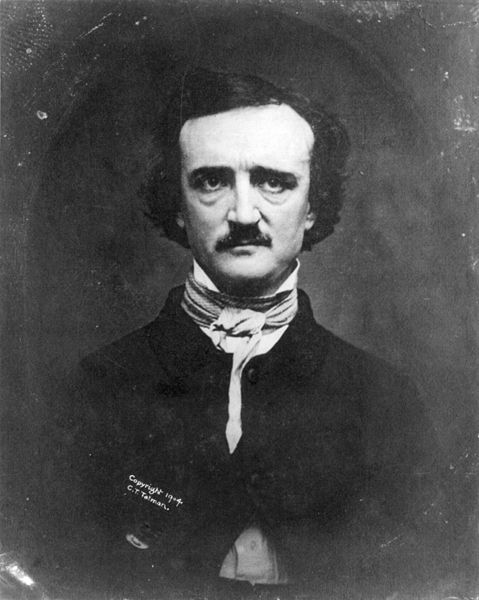
Happy Deathday, Edgar Allan Poe!

We’re coming up on the anniversary of Edgar Allan Poe’s 1849 death, which is rather fitting since we’re coming up on Halloween. I know; Poe was more than the Cask of Amontillado, The Tell-Tale Heart and The Raven, but undoubtedly he is best known for his chilling tales. But I thought we’d delve a little deeper into Mr. Poe to celebrate his upcoming deathday. I somehow think he would prefer that people celebrated that instead of his birthday anyway.


Tamerlane and Other Poems

If you’re looking for an almost one-of-a-kind Poe collectible, keep an eye out for Tamerlane and Other Poems. Poe was a mere 18 when it was released in 1827; only 50 copies were published, credited to “a Bostonian”. The 40-page collection was paid for by Poe himself and definitely showed his age - most of the poems were about youth and the trials of it.

At this point in time, it’s thought that only 12 copies of Tamerlane still exist. You can find one at the Poe Museum in Richmond, Va., and most of the others in private collections. It has fetched as much as $125,000 at an auction.

Virginia Clemm

In 1835, Poe married his first cousin. Here’s how that happened: after Poe was discharged from the Army in 1829, he went to live with his aunt and her family. For a while Edgar was pretty taken with the girl next door, a Miss Mary Devereaux. Virginia played Cupid for a while and carried messages back and forth between the two of them. It didn’t pan out, though, and eventually Poe moved to Richmond to take a position at the Southern Literary Messenger. He hadn’t forgotten about Virginia, though, and started to make plans to marry her. Another cousin heard about this and was not happy about the prospect and pleaded with Virginia’s mom to consider the girl’s education instead of letting her marry Edgar. Edgar was devastated and wrote a letter to his aunt, begging her to let Virginia decide her future for herself… she was only 13 at the time, but maybe 13-year-olds were more mature then. The clincher was probably when he offered to financially support not only Virginia, but also her mom and brother. The family was living in almost total poverty, so no doubt that was pretty appealing to the Clemms. They ended up getting married either in 1836… or it may have been 1835. They filed for the license in 1835 and it’s believed that they may have quietly been married at the same time, but they didn’t actually have a public ceremony until 1836.

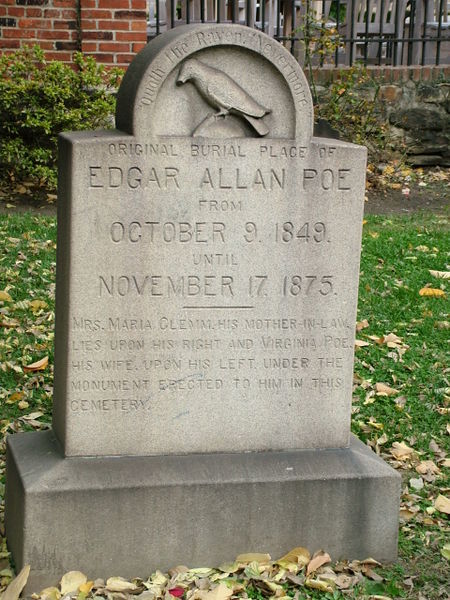
It definitely wasn’t a normal relationship - Poe referred to his wife/cousin as “Sis” and “Sissy”. Some biographers think their relationship was more of a companionship sort of a thing, and that their marriage was never actually consummated. Regardless, they seemed very supportive and devoted to one another (despite some infidelity rumors), so when she died of tuberculosis at the young age of 24, Edgar was devastated. It’s assumed by a lot of Poe followers that his famous poem Annabel Lee is based on her. As she was dying, she asked her mother to “take care of my poor Eddy - you will never never leave him?” And her mother made good on the agreement - she did stay with Edgar until he died in 1849. And how did that happen??


Death

On October 3, 1849, Poe was found wandering the streets of Baltimore, an absolute mess and completely delirious.
It would appear that he was wildly drunk, and he was definitely wearing someone else’s clothes. He was taken to the hospital, but never came to enough to explain what had happened, and his death certificate is missing so we don’t even know what the official cause is, but newspapers reported “congestion of the brain” and “cerebral inflammation”. So what really happened? I Think the most interesting theory is this one: he was caught in cooping scam. In today’s day and age, cooping doesn’t happen. Gangs would kidnap drunks, homeless people and other innocent bystanders and hold them in a room (a “coop”) during elections. They would force these people to vote for their man over and over again, beating them if they wouldn’t comply and making them change clothes to vote over and over again in the same place. Was Poe a victim of this? We don’t know for sure, but it’s possible. The flaw in this theory, though, is that Poe was well-known in Baltimore at the time and would surely have been recognized if he tried to vote over and over again. But if he was dirty and beaten to a pulp, maybe not.
Image from krichter

The Poe Toaster

This isn’t an obscure fact about Poe, but it’s interesting nonetheless. Since 1949, a mysterious person nicknamed “The Poe Toaster” has appeared at his grave in Baltimore to toast him with cognac. He also leaves three roses. The Edgar Allan Poe Society in town has helped hide the secret of the Poe Toaster’s identity for years, although a man did confess to being behind the annual tribute. However, his story apparently has a lot of inconsistencies and holes in it, so it’s believed that his “confession” may not be entirely true.

Original here

Where Are Our Manners?


By: Rebecca Brown (View Profile)

As I crammed myself onto a crowded train this morning, I noticed there was a very pregnant woman standing near me, jammed in tightly and hanging on for dear life. I looked at the passengers sitting in the seats that are supposed to be surrendered to the elderly, physically challenged, and other people who need to sit, and all of them were listening to iPods. Most of them were also texting or reviewing email, one person was reading on a Kindle, and two people were watching movies. Not one of them even looked up; everyone was too absorbed in what they were listening to, reading, or watching to even notice the protruding belly and flushed face of the pregnant passenger.

Over the past few years, there have been countless discussions on minding our manners within our new modes of communication. Is it rude to text someone and ask him on a date? When is it appropriate to forward an email? Do we befriend someone on a social networking site we’ve only met once?

But while we’ve been debating the dos and don’ts of technology etiquette, it appears that many of us have forgotten some of the old school manners that our parents, grandparents, and teachers taught us—manners that have nothing to do with a keyboard or a monitor, but have everything to do with the long-forgotten Golden Rule. Maybe technology has eroded our brains so much that we can never go back to those golden days, but there are a few simple courtesies that I’d like to see make a comeback.

Hold doors for people.
This doesn’t just mean men holding doors for women—anyone who has the arm strength to hold a door for someone should. Holding a door shows that we’re paying attention to what’s going on around us and that we care about others even if they’re a complete stranger. That little bit of awareness also helps take our minds off the busy, crappy day we might be having. Plus, it’s a nice and unexpected way to pay it forward, kind of like smiling at a stranger. Hold the door for someone and someone else will hold it for you later.

Give up seats.
Lizzie Post, great-great granddaughter of Emily Post and author of How Do You Work This Life Thing?, says this is one practice she’d like to see happen more often. “Giving up your seat to someone is so easy. Even when people don’t accept your offer, I think it’s nice to get up and stay standing so they know you’re sincere. The more that we become the good example, the more it will catch on.”

Most of us were taught that it’s good manners to give up our seat to the elderly, pregnant, and physically challenged. But if we pay attention on trains, buses, in waiting areas, and other places where people stand, we might notice someone else outside those categories who could also use a seat—like someone carrying a bulky box or a heavy load of groceries. Common sense should prevail; if you see a situation where you think you’d prefer to sit, it’s a good idea to offer your seat.

Let those inside the elevator exit before you enter.
You know the scene. The elevator doors open and a crowd of people waiting to get on rushes toward you, making it difficult to get out. Post says the onus of politeness falls on those waiting for an elevator, meaning they should clear the exit path for anyone getting off and not enter the elevator until it’s clear. She also recommends that waiting until all people exit is a good rule to follow before entering anything—restaurants, shops, dressing rooms, etc.

Mind your telephone manners.
Our chief etiquette concern back in the “olden” days of telephones was remembering to write down a message when someone called. Now that we can take our phones anywhere and use them to do scores of things beyond just making telephone calls, our problems have spiraled out of control. Obnoxious ringtones, picking up calls in public places, sending a text message when a call would be more appropriate, and subjecting innocent bystanders to inappropriate conversations are just a few common telephone missteps.

But Post says that many of our phone snafus could be corrected if we’d follow one simple rule. “Excusing yourself to take a phone call in a private place is something I’d like to see more of. We’re so used to people being on the phone now that this isn’t a common practice anymore.” But what if we we’re in a place where we can’t step out to take a call? Post recommends to keep it brief and to keep the conversation appropriate. “Making plans is okay,” she says. “[But] if you’re gossiping, talking badly about someone, or saying something inappropriate, those should be closed-door conversations.”

Introduce people.
In Bridget Jones’s Diary, Bridget’s friend Shazza nails it when she advises Bridget to “introduce people with thoughtful detail.” Walking up to a group of people and never getting introduced is awkward and rude. This is often a sign that the person who should do the introductions has forgotten a name, which makes a great case for simply asking the person in question to tell you their name again. It also proves that introducing someone with some details and flair makes a difference; the person on the receiving end of the introduction will have more information to use when committing a name to memory.

Say please, thank you, and you’re welcome.
It sounds simple, but the magic words really do work magic. Using them shows our appreciation for what someone is about to do or has done for us. Says Post, “Pretty much everyone says thank you, which is fantastic. But I would love to hear more people use ‘please’ and ‘you’re welcome.’ If I say ‘thank you’ back to you and not ‘you’re welcome,’ that’s overriding your ‘thank you.’” Our moms weren’t just being cute when they told us we would catch more flies with honey. “Please,” “thank you,” and “you’re welcome” are some of the sweetest—and most useful—words in our language.

Respect elders.
Recently someone I know well surprised me by saying that he thought respecting our elders was a silly courtesy since not everyone deserves to be respected just because of his or her age. Touché. But how about simply showing them civility and common courtesy? An elder is, by definition, someone who has lived longer than we have, so they’ve accumulated more experiences and thus, more wisdom. We don’t have to agree with their wisdom, but acknowledging that there might be some helpful information that comes from their experience is nice. It’s also considerate to express gratitude to a related elder who helped pave the way and/or care for you or a family member who came before you, such as a mother or uncle.

Handwrite thank-you notes.
Paper correspondence in general seems to be a dying practice and unfortunately, handwritten thank-you notes are part of the casualties. I know I’m often guilty of sending a thank-you email when I’m pressed for time, which seems to have made its way on the list of accepted practices. But it’s that taking of time that really shows our appreciation. Anyone can send an email, but finding a nice piece of stationery or note card, handwriting our thanks, finding a stamp (who has those anymore?), and then getting to a mailbox to actually send it goes above and beyond in expressing our gratitude.

Sophisticated technology doesn’t mean that good manners have to be a thing of the past. In fact, Post says she defines good manners using three simple, everyday principles: consideration, respect, and honesty. “Apply those to any situation and toward all the people involved—including yourself—and [the solution] will make sense.”

Original here